
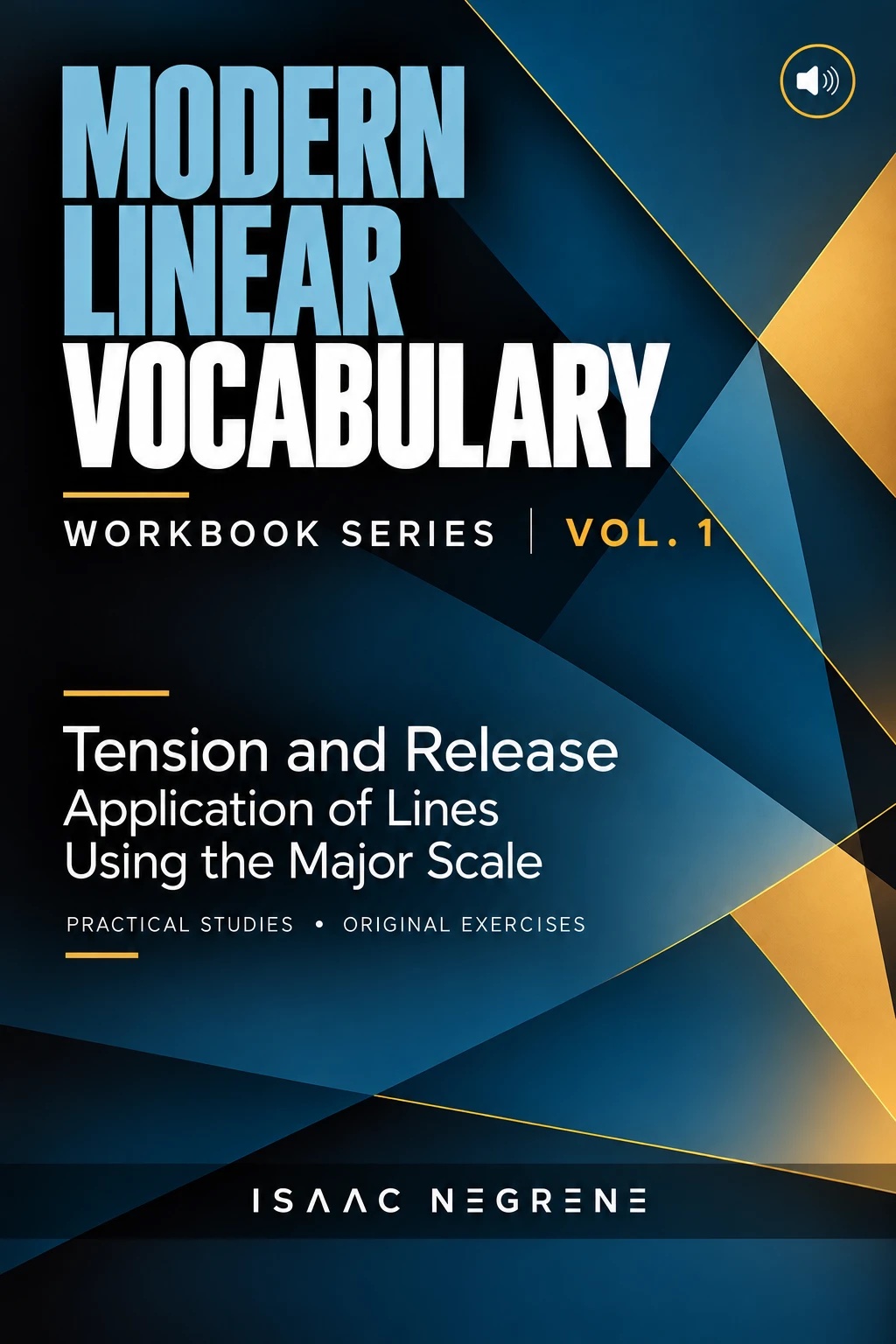
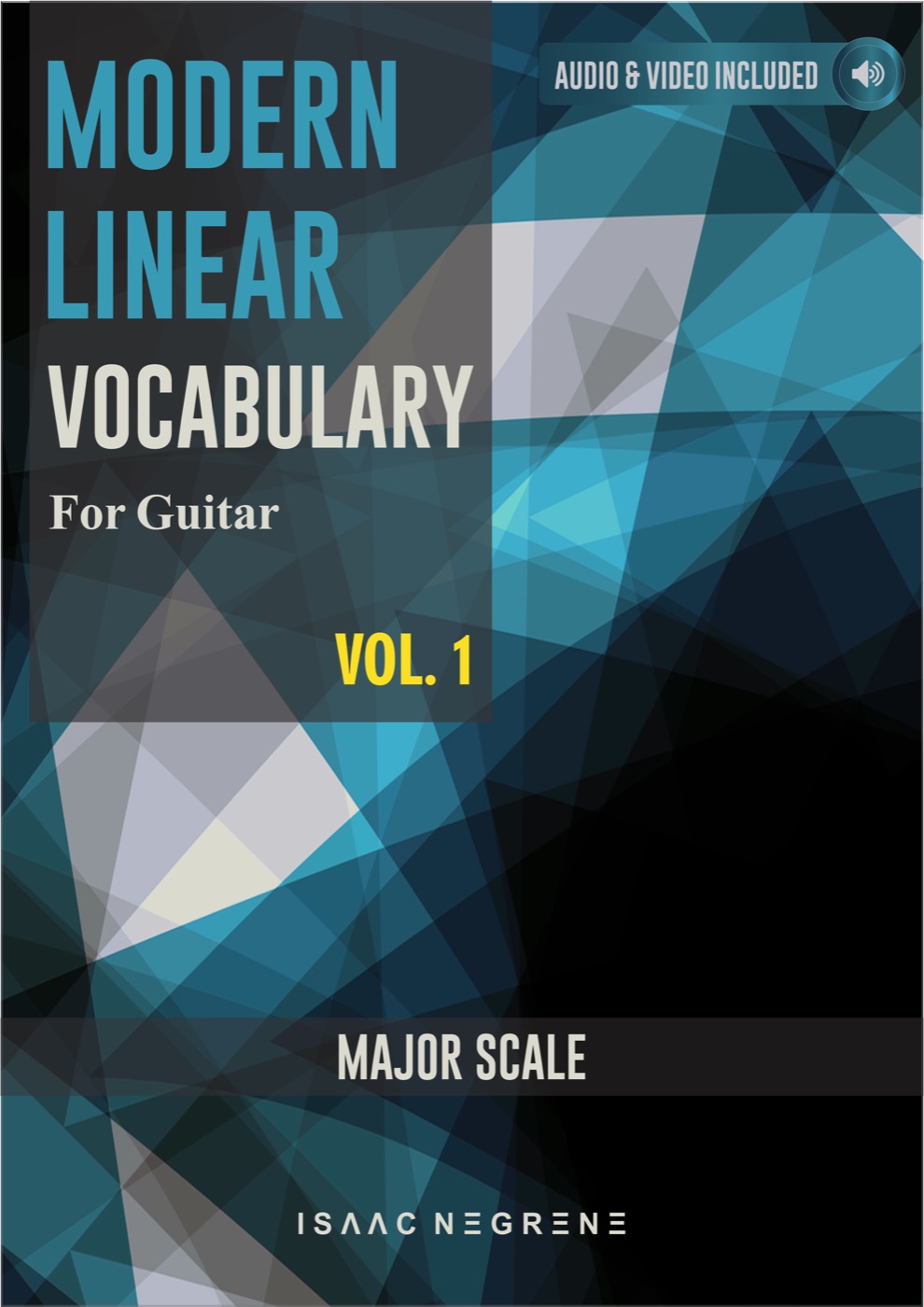
Modern Linear Vocabulary · Isaac Negrene
Develop your vocabulary without limitations
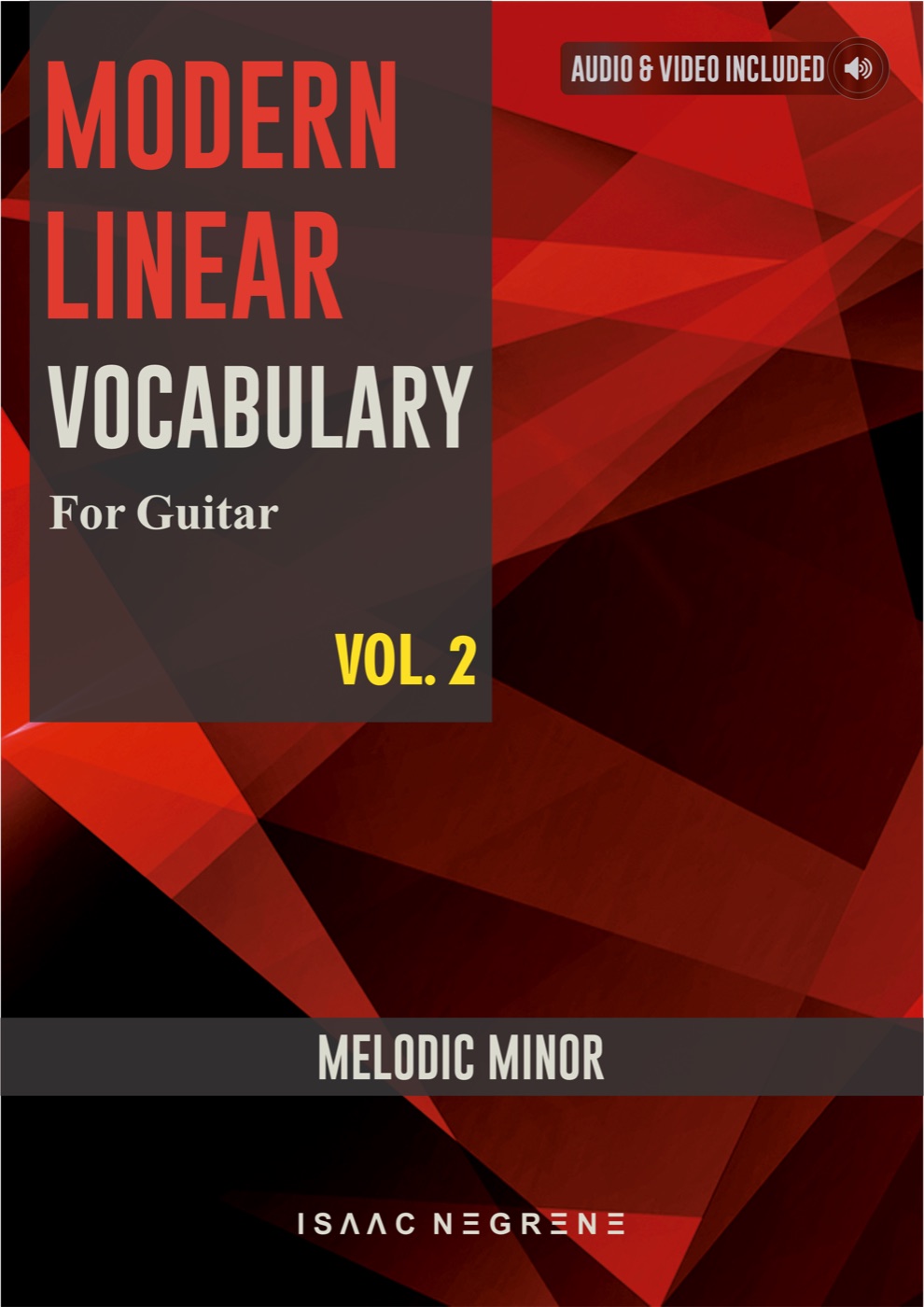
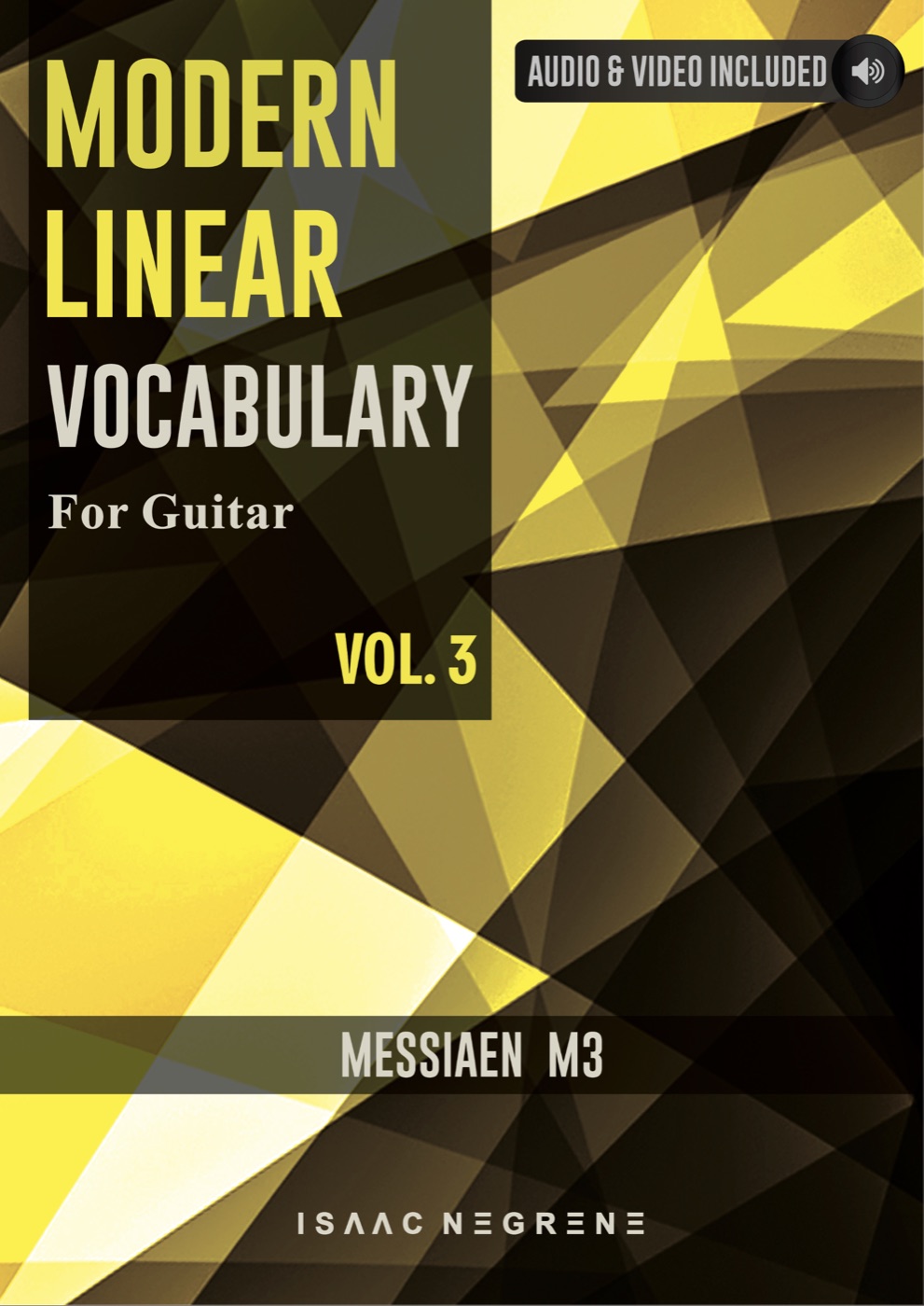
A four-volume ebook series of modern jazz guitar lines, with tablature, audio at three speeds and slow video demonstrations. You can create endless possibilities.
The method
Lines that work at any speed, over any harmony in the key
The collection was born from the desire to expand musical vocabulary and melodic possibilities, bringing new colors and ideas capable of transcending conventional scales and patterns. A single idea can be applied to various harmonic qualities, without being restricted to specific modes or chords.
20melodic lines per volume, in standard notation and tablature
3audio speeds for every example: 50, 100 and 150 BPM
2hands fully detailed: fingering and picking directions
▶slow video demonstrations of all examples

The collection
Four volumes, four sounds
Instant digital ebooks · Regular price US$ 35, now US$ 32 each · R$ 150 in Brazil
Review
“This book from Isaac Negrene is out of the ordinary.”
— Az Samad, guitarist and educator
In Isaac's new book, he shares out of the box, across the fretboard lines that are VERY DIFFICULT to play but extremely rewarding. These lines use large intervals, legato playing and unconventional fingerings to get more modern sounds. You know, the kind of stuff you hear people like Lage Lund, Mike Moreno, Jonathan Kreisberg, Ben Monder play – that kind of stuff. Cool, difficult, modern and interesting stuff.
Read the full review
For guitarists, there is an abundance of online lessons available, often for free. So, the question is when should someone spend their hard earned money on a book? Well, this is one of those times.
In Isaac's new book, he shares out of the box, across the fretboard lines that are VERY DIFFICULT to play but extremely rewarding. These lines use large intervals, legato playing and unconventional fingerings to get more modern sounds. You know, the kind of stuff you hear people like Lage Lund, Mike Moreno, Jonathan Kreisberg, Ben Monder play – that kind of stuff. Cool, difficult, modern and interesting stuff.
I particularly love how he gave nick names to each of the 20 examples. ‘Monster Line Connection’, ‘Spread Fingers’ and ‘Confusion’ should give you an idea of what's in store. Also, the fragments section at the beginning of the book is helpful for those who want to work in small bite size ideas before trying out the difficult longer full examples.
If you're a music college student, this is your food. If you're a contemporary guitarist looking to get new ideas into your playing, this is the real stuff.
Like I said, these lines are hard – but man, they sound so good (when you can play them). In conclusion, if you like modern jazz sounds – this is a great book to get.
Source: azsamadlessons.com


About the author
Isaac Negrene
I am a guitarist with over 30 years of experience, also working as a producer, arranger, and teacher. I am the author of the four-volume “Modern Linear Vocabulary” collection, recognized worldwide as an innovative and groundbreaking work in modern language for guitarists and instrumentalists.
I am a member of the legendary Banda Black Rio, an icon of Brazilian music from the 70s, and collaborate with the British singer Jesuton. I am also producing my solo album, which will reflect my musical journey and vision.
Stages
Plus jazz festivals and concerts in Buenos Aires, Montevideo, Mercedes, Bogotá, Madrid and Zaragoza.
Played with
My mission is to expand musical horizons and create unique connections through music.
FAQ
Questions
Who is Modern Linear Vocabulary for?
The series is for musicians who want to move beyond familiar scale patterns and develop a more personal approach to improvisation. The notation and tablature are designed for guitar, while the melodic concepts can also inspire players of other instruments. Work at your own pace and begin with short fragments before tackling longer lines.
How should I practice the lines?
Start with short fragments and practice slowly. Focus on the fingering and picking instructions for both hands until each movement feels comfortable. Then practice with the included audio, beginning at 50 BPM and increasing the tempo gradually. Listen closely to the phrasing as well as the notes.
Can I use these ideas in different musical styles?
Yes. Adapt the melodic ideas to the style you play by changing their rhythm, phrasing, and articulation. You do not need to play every line at a fast tempo: try short melodic fragments, leave space between phrases, and combine single-note lines with chords.
Do I need to learn every example?
No. Choose the lines that appeal to you, combine fragments from different examples, and use them to create your own phrases. The goal is to develop musical freedom and a vocabulary that reflects your own voice.
Do I need to follow the suggested fingering?
You can adapt the fingerings, but the suggested choices help develop efficient movement, clear articulation, and fluid phrasing across the fretboard. They also give you musical material for practicing techniques such as hybrid picking. Start with the written fingerings, then explore alternatives that suit your hands and musical ideas.
How do I receive the ebook?
Pay securely with PayPal (US$) or, in Brazil, with Mercado Pago (R$). After your payment is confirmed, the access link to the ebook, audio and video is sent to your email within a few hours.
Which volumes can I explore in the series?
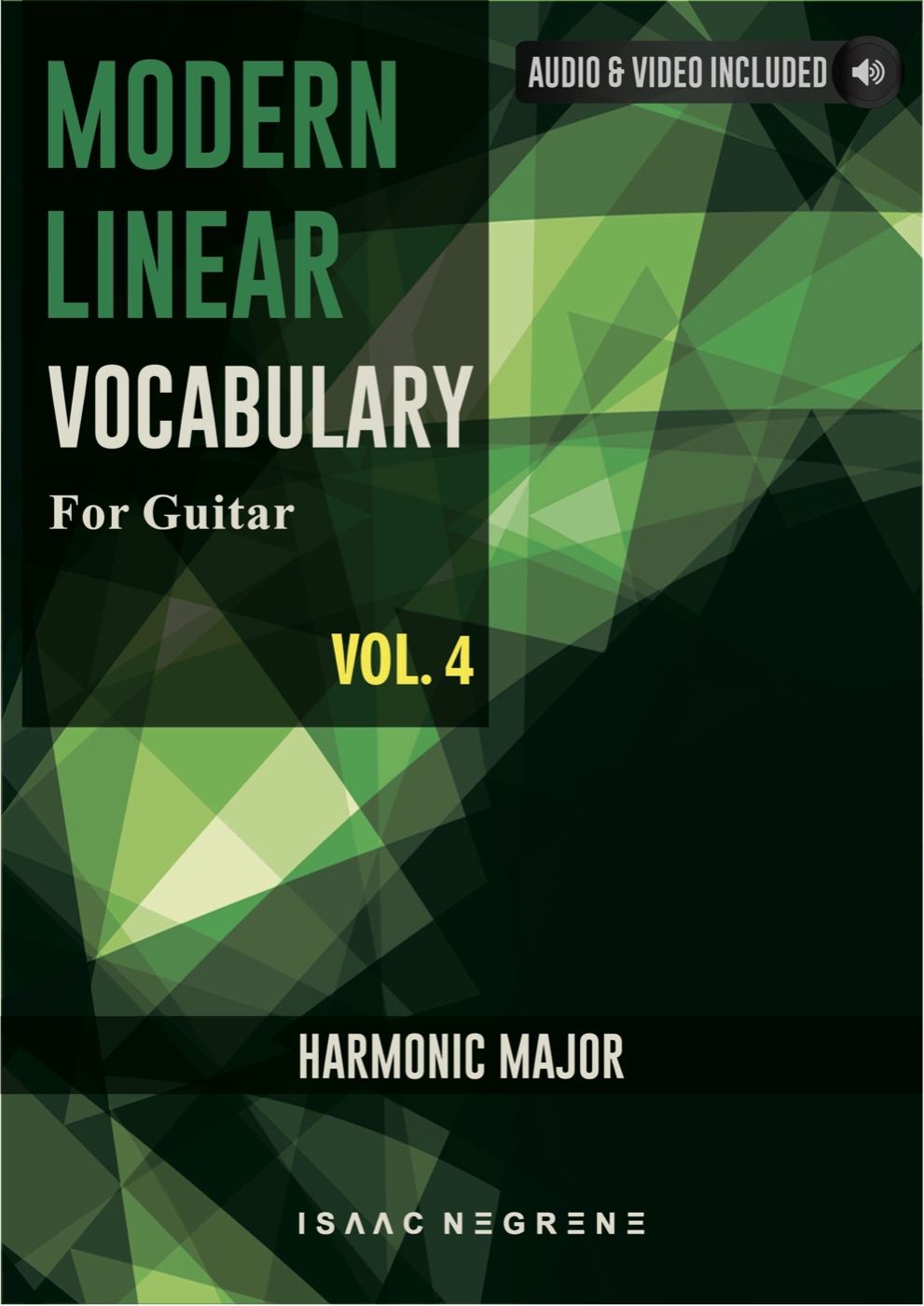
Vol. 1 (Major Scale), Vol. 2 (Melodic Minor), Vol. 3 (Messiaen's Third Mode), and Vol. 4 (Harmonic Major).
Contact
Get in touch
Questions about the books, lessons or the workbook? Send a message here or on social media.